
I’ve always loved the idea of drawing my own characters and drawing from my imagination. But I always struggled with how to design a character. I loved watching cartoons growing up and creating an entire world with characters in your head is absolutely amazing.
I even switched majors in college from engineering to art to learn how to draw, but unfortunately school didn’t teach me anything about what I always wanted to do — make cartoons.
Now I’m 36 and decided to take another crack at it. No matter what as time goes by I keep coming back to this nagging feeling inside that I want to create an imaginary world and make it real.
So this is my attempt to learn and master a skill I always wanted.
So if you want to learn how to create characters, make comics, or make animations this is for you.
Step 1: The Idea
Creating a character goes deeper than just the final render of your original character. We are all guilty of it and we start off with trying to draw the character before anything else.
Now there’s no set of rules into character design but this is usually the last step. I’m guilty of it myself but in my research I found there is an easier process.
The first step to great character design is coming up with the idea of your character.
We usually have something in our head but we can’t really identify it.
Now when I say idea this includes, the vibe, the emotion, or the personality of your character.
So before you even draw a line, it’s better to plan and think about how you would describe the character.
It doesn’t have to be an elaborate explanation but it can be wrapped up in one word or sentence. What’s important is this one idea is the source and background to your character.
Think about it with this question in mind:
“if I were to make this character a real person what would they be like”.
For example, did you know in the anime Naruto each character has a birthday. Naruto’s is October 10, (that’s 4 days after mine which is cool because Naruto is my favorite Anime)
But that’s how detailed they got into the character development.
Your character could be based off your own personality, your likes, dislikes, interests, or inspirations.
A few questions to start off with are:
- when were they born
- What’s their personality
- What does this character like doing
- Where are they from
If you want a few more ideas, here is a great resource you can use to come up with ideas about your character
Now that you have a singular idea of what this character vibe is it’s on to step 2
Step 2: Build A World
The second thing to designing a character is creating a world for them.
What I learned is it helps to give your character a setting to be in.
If you know of the creation story in the Bible it’s similar to that. Before man was created God created a world for him to live.
It’s the same thing.
Your character needs a world to live in, what’s their backstory, their dreams, why does this character even exist.
I used to want to just draw characters in my head but I realized that creating a world for your character should be the fun part.
It helps to define what the character looks like, what kind of clothes they wear, hairstyle, traits, and challenges.
This process shows that character design is more than just drawing a doodle on the page but how to bring a character to life. It’s about how you relate to this character and how others can as well.
That’s another thing that’s important to character development, how relatable are they? This is what makes your characters human: their personality and emotions.
For my first character I want to design him around one of interests, skateboarding. But now that I understand this process I’m thinking what is this character all about and his main goal is he wants to be the best skater.
Then I thought about other characters I could create for this character to interact with based other things I like to do like workout, draw, build things.
As you can see that’s 3 other characters I could play with and each one can have their own background and story.
A great example of this is One Piece. Even though they are all on the same crew they each have their own personal goals and support each other. Luffy wants to be king of the pirates, Zoro the greatest swordsmen, Nami create a map of the entire world. It’s such a beautiful way they tie it all together.
Step 3: Design The Character
Now this is the fun part, we get to start drawing, but there’s still a process before you get to the final render.
This is where you’re still planning and playing around but now you’re doing it visually.
You’re taking all the ideas you had from their personality and their world setting and creating visual elements on how that will look.
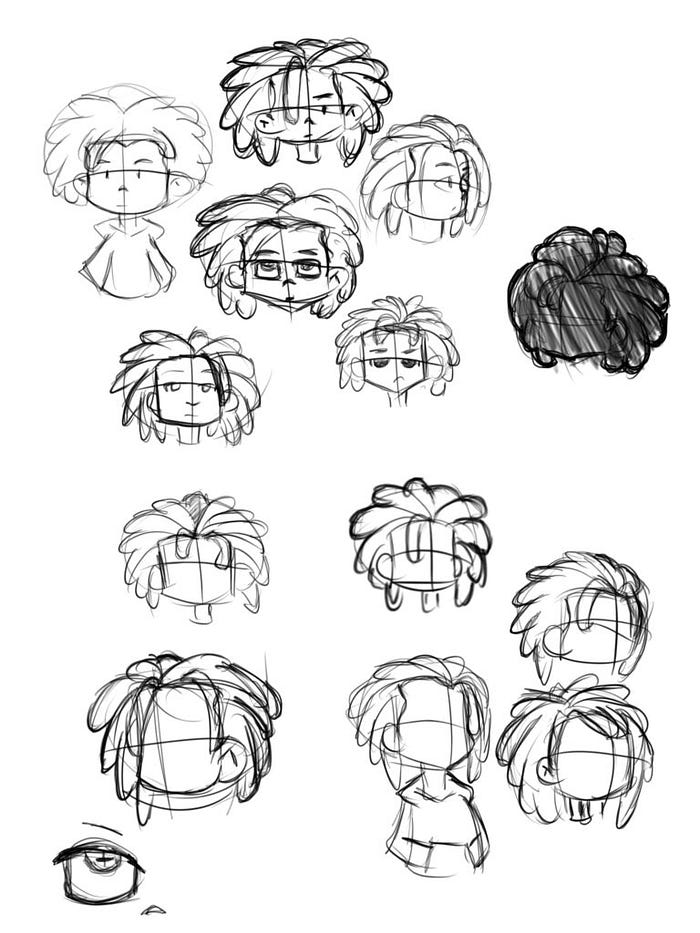
The best way to start doing this is using shapes. If you look at all your favorite characters they will have an iconic design that you can recognize from their silhouettes.
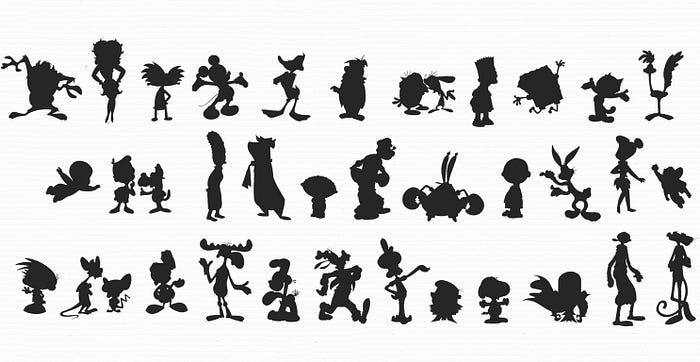
(credit character design reference)
So if you want to create recognizable characters think about the shapes that will represent your character. Also different shapes represent different emotions and ideas.
Here’s a few examples of what shapes represent in design
- Squares: Stability, framing, and importance.
- Rectangles: Calm, security, and order.
- Circles: Gentleness, unity, and balance.
- Triangles: Stability, power, and energy.
- Parallelograms: Dynamic, harmonious, and balanced.
If you want to learn more about the psychology of shapes here is a great find.
This is where you go back to your initial idea and think about what you want your character to say.
Round shapes can express friendly, and gentle while sharp angles can represent power or order. Look at some your favorite characters and see if you can spot the difference.
Here’s an example between Avatar Aang and Zuko:
When I think of Aang I see happy, friendly, and funny. Despite the fact that he is bald it helps with the idea of a more open personality and even his clothes are designed to represent his light airiness of his background.
While Zuko who comes from the fire nation has a more sharper look to him especially with his pointy armor that gives off a more aggressive feel.
Colors play a role into your design as well and putting random colors will just cause confusion. Now I don’t know color theory but a key rule is to keep it simple and use only use 3–4 complimentary colors, with one accent color.
An insight I learned as well is if you’re looking to create comics, like manga, it’s important to keep a black to white ratio. What this means is to have some darker elements and not completely black and white line work.
For example they can have black hair elements or their clothes like a belt or gloves. It helps to break up all the white.
Conclusion
There you have it, the 3 key elements to creating a great character:
- Their vibe
- Their world
- Their appearance
Character design should be fun and the best thing I realized about learning any skill is have a process.
A process helps to make the transition from start to finish much easier. But the best part about character design is figuring out what kind of world you want to put them in.
Think about all your favorite characters and why you like them so much.
What traits do you relate with and which ones would you love to put in your own designs. I am a supporter for taking inspiration from others and blending them with your own.
There is nothing new under the sun and blending different things together is the basis of creativity.
So flesh out those ideas, build a world for your character to live in and start sketching.
Again if you want some help with coming up with ideas for your characters check out this character interview questionnaire